The last weekend in October is the CQ World Wide contest – The CQ WW is the largest Amateur Radio competition in the world. Over 35,000 participants take to the airwaves with the goal of making as many contacts with as many different DXCC entities and CQ Zones as possible.
Normally I use contests as an opportunity to test new configurations or to target specific geographies, however in during this years contest I had the benefit of being away on a training exercise during the contest. This gave me better access to antenna space and time away from the family meaning I could really invest some time in the contest.
For the CQWW I was able to setup an elevated Terminated Folded Dipole antenna in a great location, in a rural area away from RF noise with good take-off angles for long range communications. The previous week I had been using this configuration to communicate with call signs in the US and Canada so I knew it would perform well. The orientation gave the maximum gain to the West/East which was ideal for contesting.
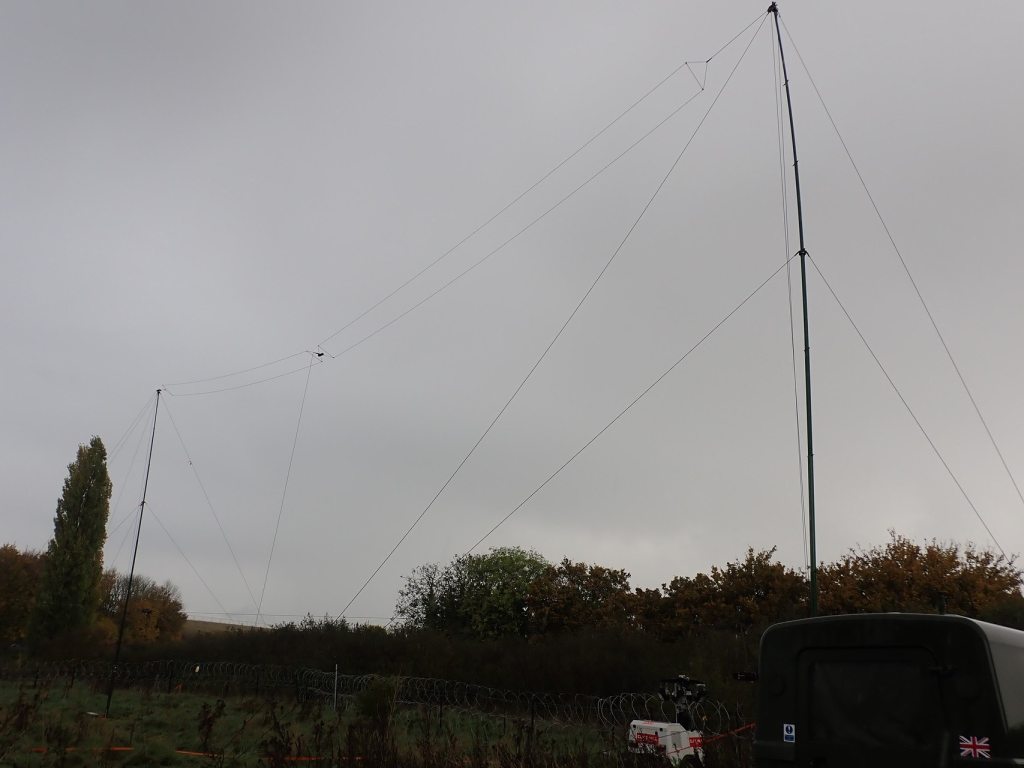
As usual I wasn’t in it for the points, I just wanted to improve my knowledge and experience. As the Terminated Folded Dipole antenna is a broadband antenna I decided I would test it’s performance across the bands as well as seeing how propagation varies during the day/night. Using the proppy propagation prediction tool I created a rough schedule of when I thought each band would be at it’s best and then ran through the bands from 40m – 10m during the daytime and then 80m in the night. I gave each band a single sweep – starting at the lowest end and working each call sign I came across until I reached the top of the band, then cup of tea, brief rest until my next planned window and onto the next band!
The results: I only operated on the Saturday starting at 0600 and finishing just past 2100 with plenty of gaps in my schedule to recuperate. I successfully worked 169 call signs all using 20w of RF power. I was pleased to see the alignment between propagation predictions and real world results. It added hugely to my knowledge of how the bands perform at different times in the day/night. I recommend this exercise to anyone wanting to improve their HF knowledge. I always look at propagation predictions when I operate and understanding how they compare to the real world is a real confidence booster for future planning.
And how did the Terminated Folded Dipole perform? It was great! I had no issues on 40 – 10m. For 80m I struggled. I think part of the problem was that I didn’t leave it late enough in the night for optimal propagation. The predictions showed that the best window would have been 0200 – 0300 rather than my attempt between 2000 – 2100… but there are some human factors that also play into these things, especially as a single operator who has been on air since 0600! That said the antenna is definitely sub-optimal below 40m but I don’t normally operate at that end of the spectrum often so I’m willing to take that hit.
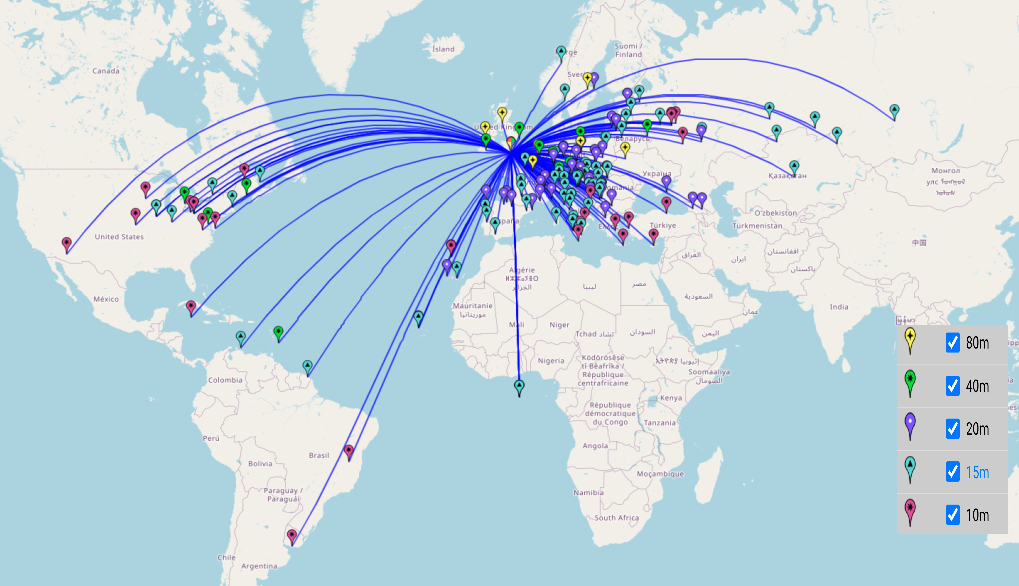
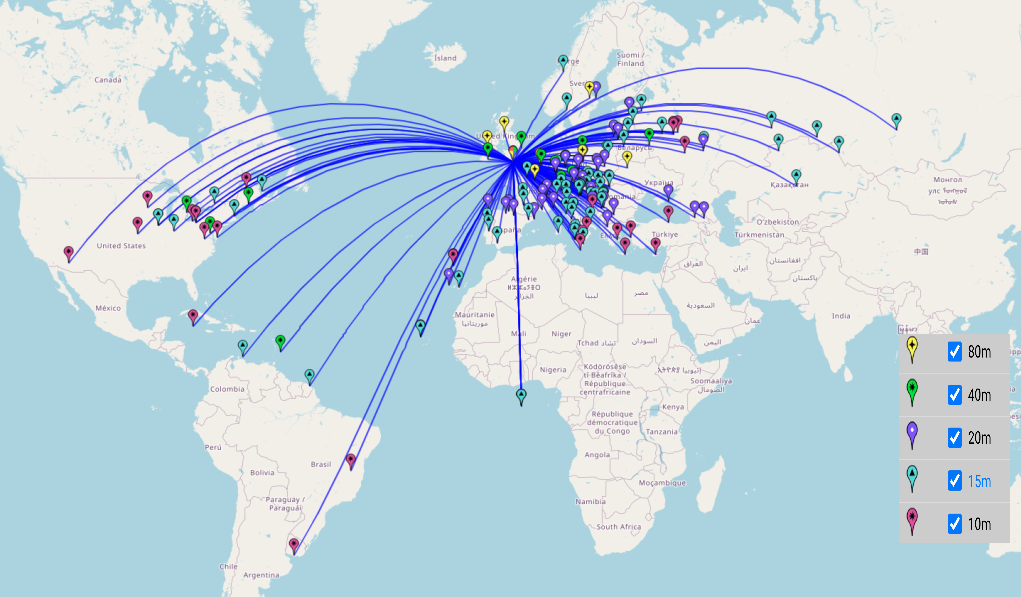
Another bit of learning can be seen below in the map of my QSOs showing location and band used. It’s great to see on the map how range and frequency are linked; with higher frequencies in the 10 and 15m bands being effective into North and South America compared to the 20 and 40m bands which were much more effective in Europe, with the 80m band providing NVIS communications at night.