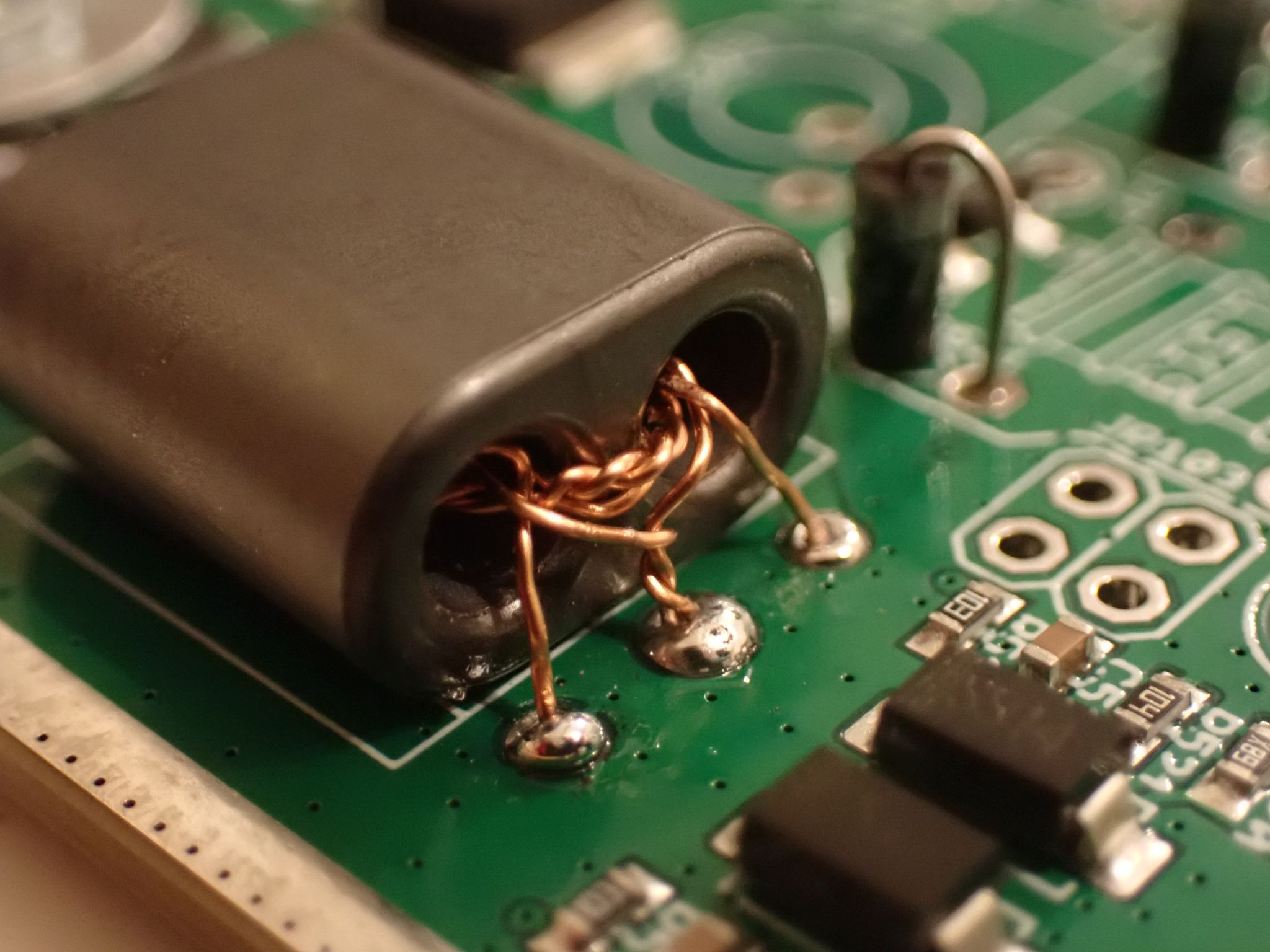
I’ve been building a QMX+ HF transceiver kit recently, and one feature really caught my attention: the “really weird twisted sisters transformer” (RWTST).
It’s a great reminder of how, at RF frequencies, the smallest physical details can make or break circuit performance.
Earlier versions of the QMX+ used a conventional output transformer. But some builders noticed that performance dropped off at the higher end of the HF bands. After some clever troubleshooting – swapping transformers between “good” and “bad” units, it became clear the issue lived in the transformer itself.
The culprit? Parasitic capacitance.
When RF-carrying wires are wound closely together, they naturally form small capacitors. In the original design, this unintended capacitance caused a parasitic resonance above ~28 MHz, limiting power output.
Ross (EX0AA) investigated and came up with the RWTST: a transformer where the primary and secondary wires are tightly twisted together before winding. Counter-intuitively, increasing the capacitance intentionally shifted the resonance to a more favorable frequency – improving performance in the problematic 10m band.
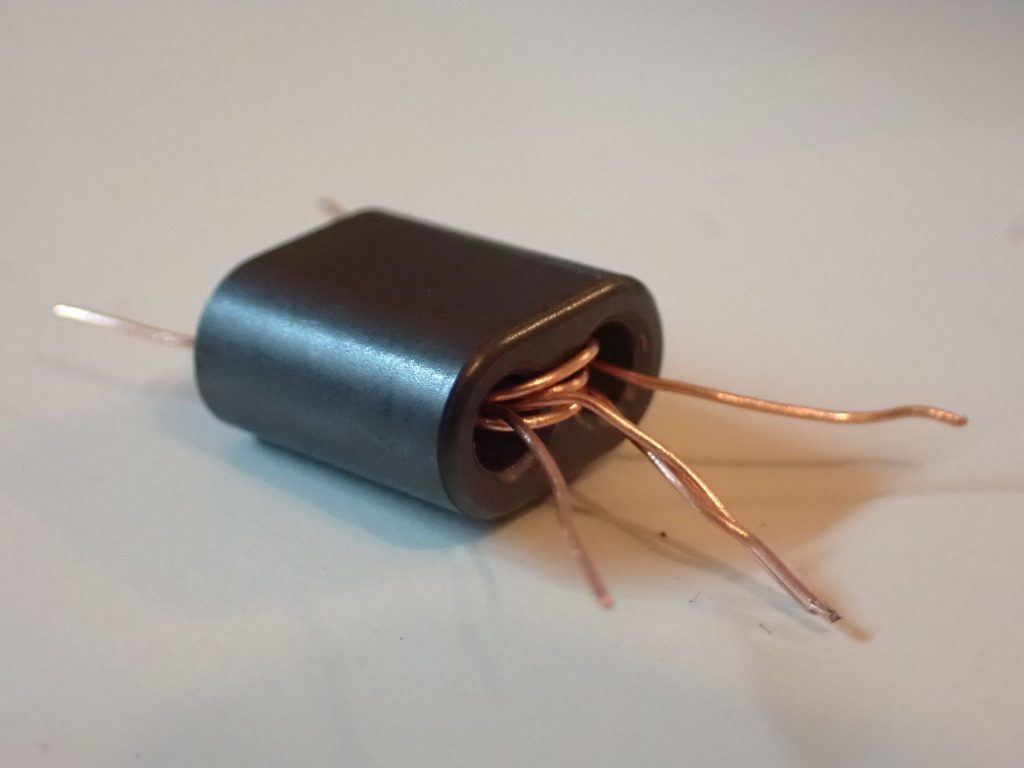
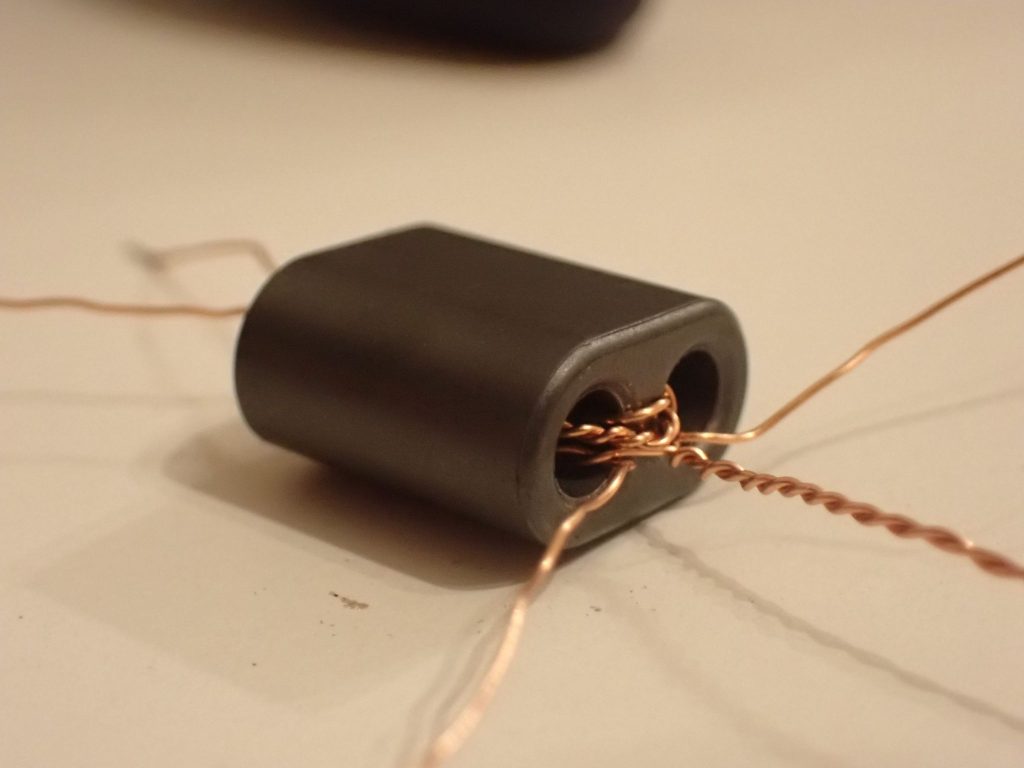

It’s a brilliant example of the “art meets physics” nature of RF design. Sometimes the solution isn’t a new component… it’s simply twisting wires in a different way.
Amazing how, in the RF world, even the geometry of a winding can be the difference between success and failure.