I started experimenting with the fan dipole concept in the summer, building one out of bits of stick and tape for a quick bit of experimentation. I thought it was about time I came back to the concept for some further testing.
The principle of a fan dipole is pretty simple. Dipole antennas for multiple frequencies are joined using a single balun. Each dipole has low impedance at it’s resonant frequency and high impedance on other frequencies. As electricity follows the path of least resistance (impedance) this means that when one of the dipoles is resonant the power from the radio will naturally favour it. In theory multiple dipoles can be connected covering multiple frequencies/bands. In practice some other factors come into play – the different elements will interact with each other, there will be capacitance between them, particularly if they are close together and this can make the antenna difficult or possibly impossible to tune. However for a simple solution to cover just two bands these effects are minimised.
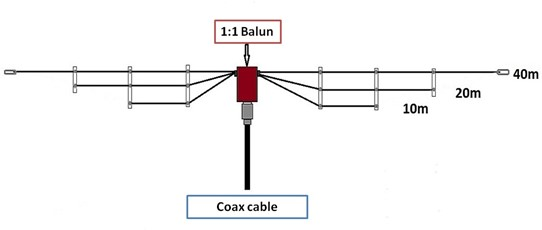
I decided to spend some time with a simple two band fan dipole setup for the 20 and 40m bands. The aim was to catch the end of the EUDX contest and then move on to some POTA.
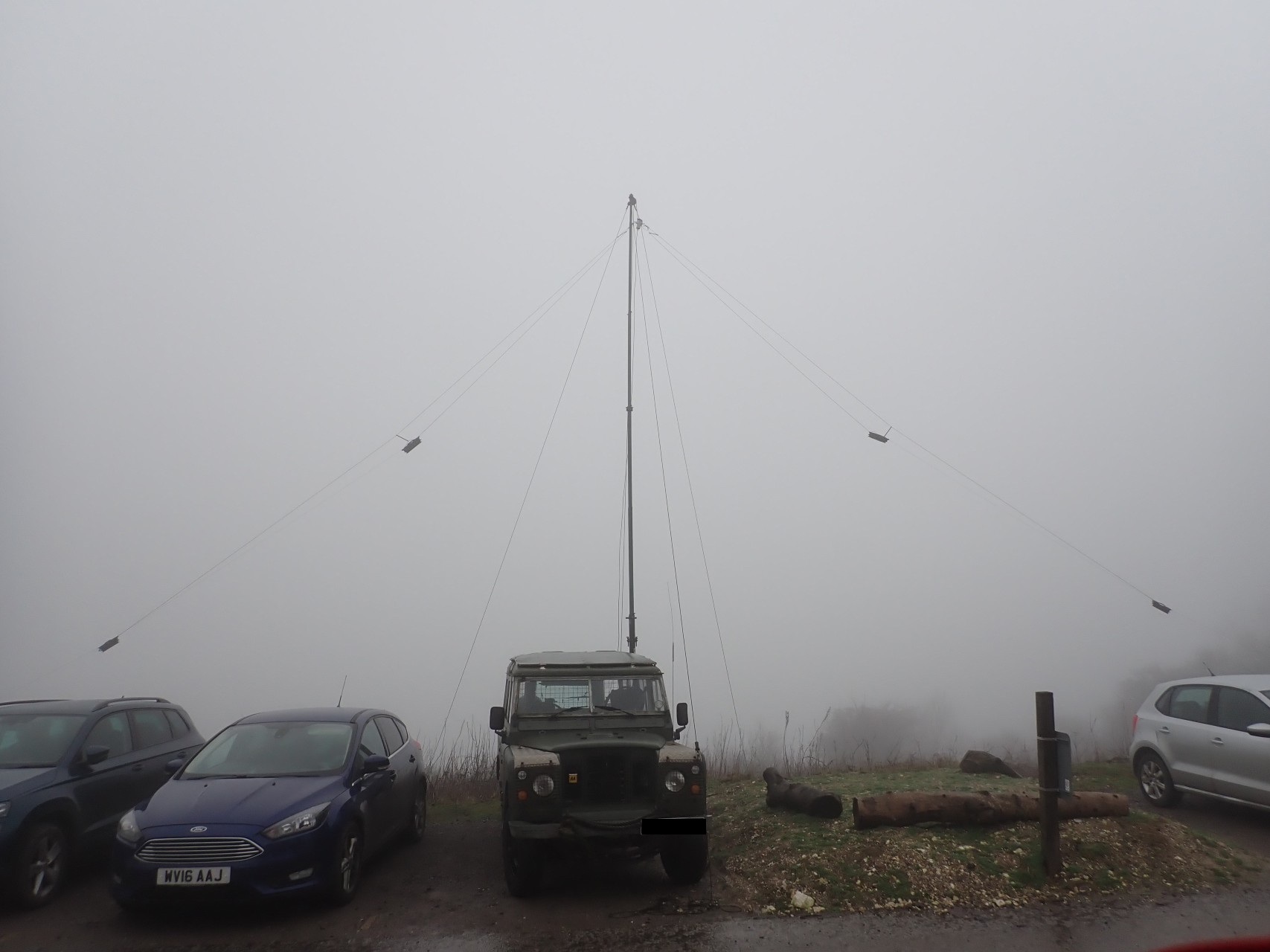
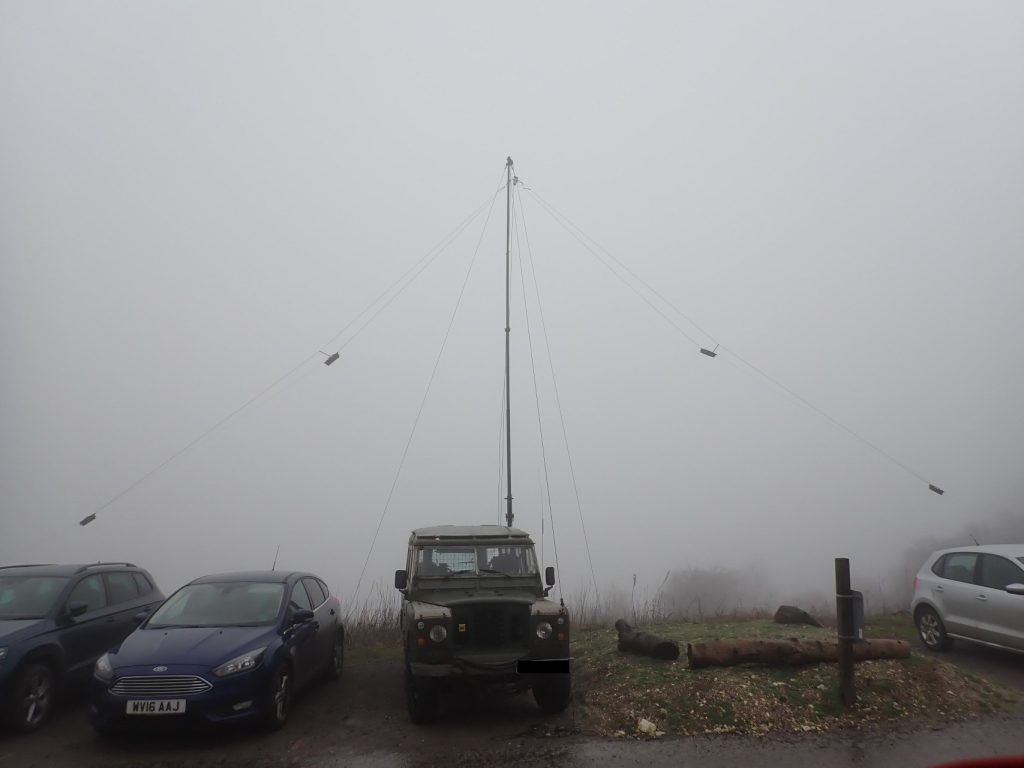
My friend Dave kindly 3D printed me some nice brackets to separate the dipole elements. Unfortunately cold and wet weather conspired against me so it took a bit longer than I had planned to set up the antenna, I was glad to have the Land Rover and PU12 mast with me to keep at least moderately warm and dry. In the end I only caught the last 30 minutes of the contest but this was enough to make a quick 13 QSOs on the 20m band. I then switched over to 40m and activated my favorite POTA location – GB-0130 Butser Hill which is also SOTA G/SE-004.
I spent 40 minutes on 40m which was plenty of time to rack up 35 QSOs and tick off the POTA and SOTA activation. I then switched over to 20m for another half an hour and a further 28 QSOs.
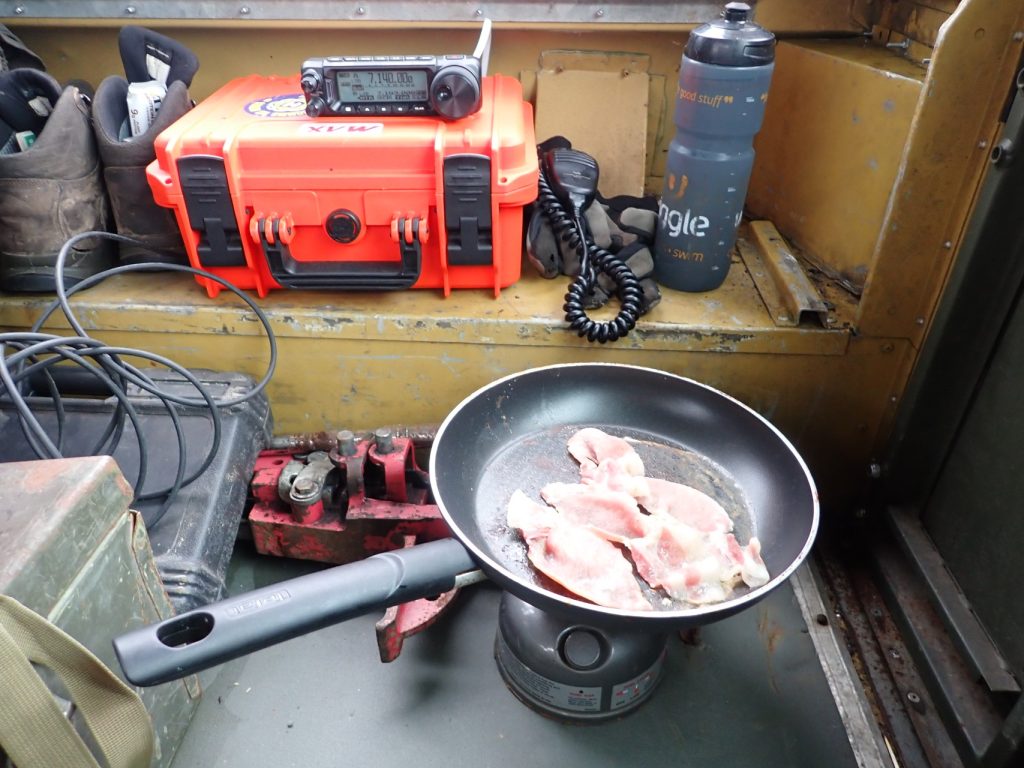
The antenna worked perfectly with VSWR >2:1 across both the 40m and 20m bands. The POTA/SOTA was pretty full on with plenty of calls coming in thick and fast but I still found time for a bacon sandwich!
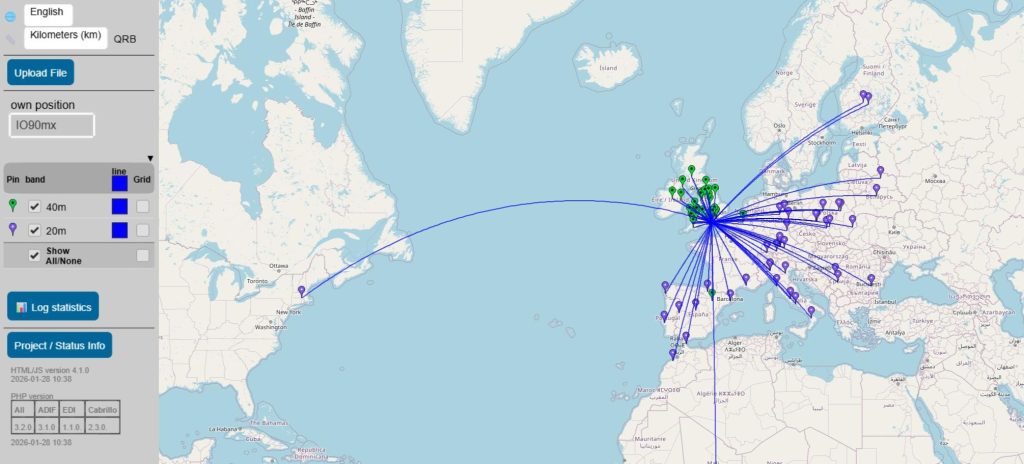
All things considered I had a lot of fun and great success with my dual band HF antenna. The results when plotted on the map really show the utility of this type of setup with the green pins showing 40m and the blue 20m. You can really understand how the frequency selection enables shorter range operation on 40m using NVIS for UK based communication where the 20m band enables longer range communications into Europe and beyond. The ability to switch between bands without having to change the antenna is a real advantage enabling the operator to reach a much wider geography than would be possible on a single band.